XQP BC22 Console - NOT FOR SALE
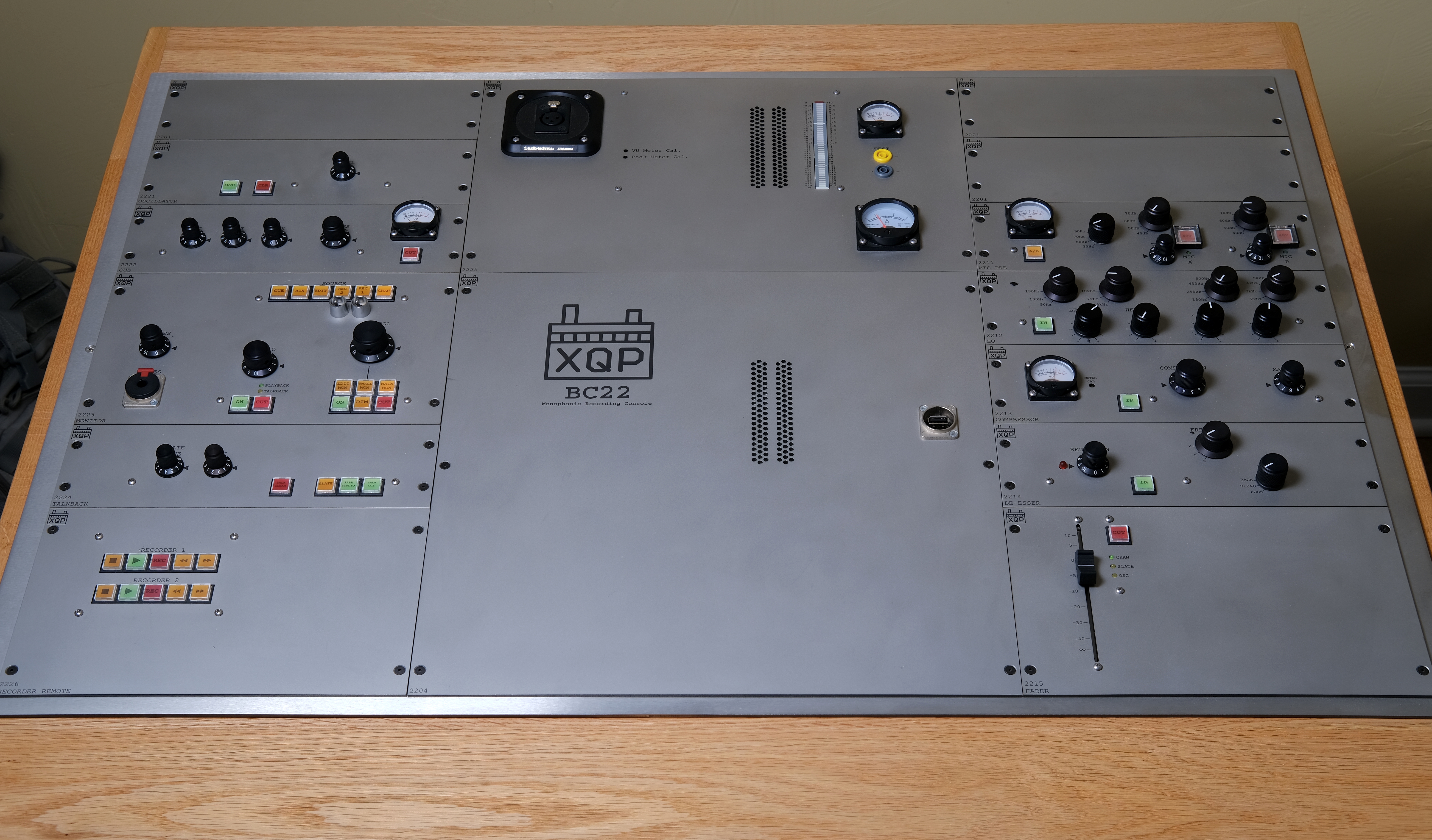
If you recall the mention of a console for recording audiobooks that was the catalyst that got the optical de-esser started, well, this is not it, but it's pretty close. The original idea never got constructed. But in 2022, when we were celebrating the 25-year anniversary of the de-esser's initial entry on the market, the console was finally designed and built.
It began with some drawings for a two-channel mic preamp made in a hotel in Shreveport. Eventually breadboarding to test ideas began which led inevitably to the design and manufacture of PCBs to really test the circuits. Panel drawings were made, acrylic prototypes were made by Ideal Specialty,...eventually I just built the thing in its entirety.
That took about 13 or 14 months or so and about $6,000. And then I had to figure out what to do next. So as this is being written in early 2026, a room in my house is gradually becoming a studio for recording audiobook, and at its heart is a custom, monophonic, one-channel console; the 2022 version of the one conceived back in about 1994 when I was an engineer at Irving Productions in Tulsa, OK.
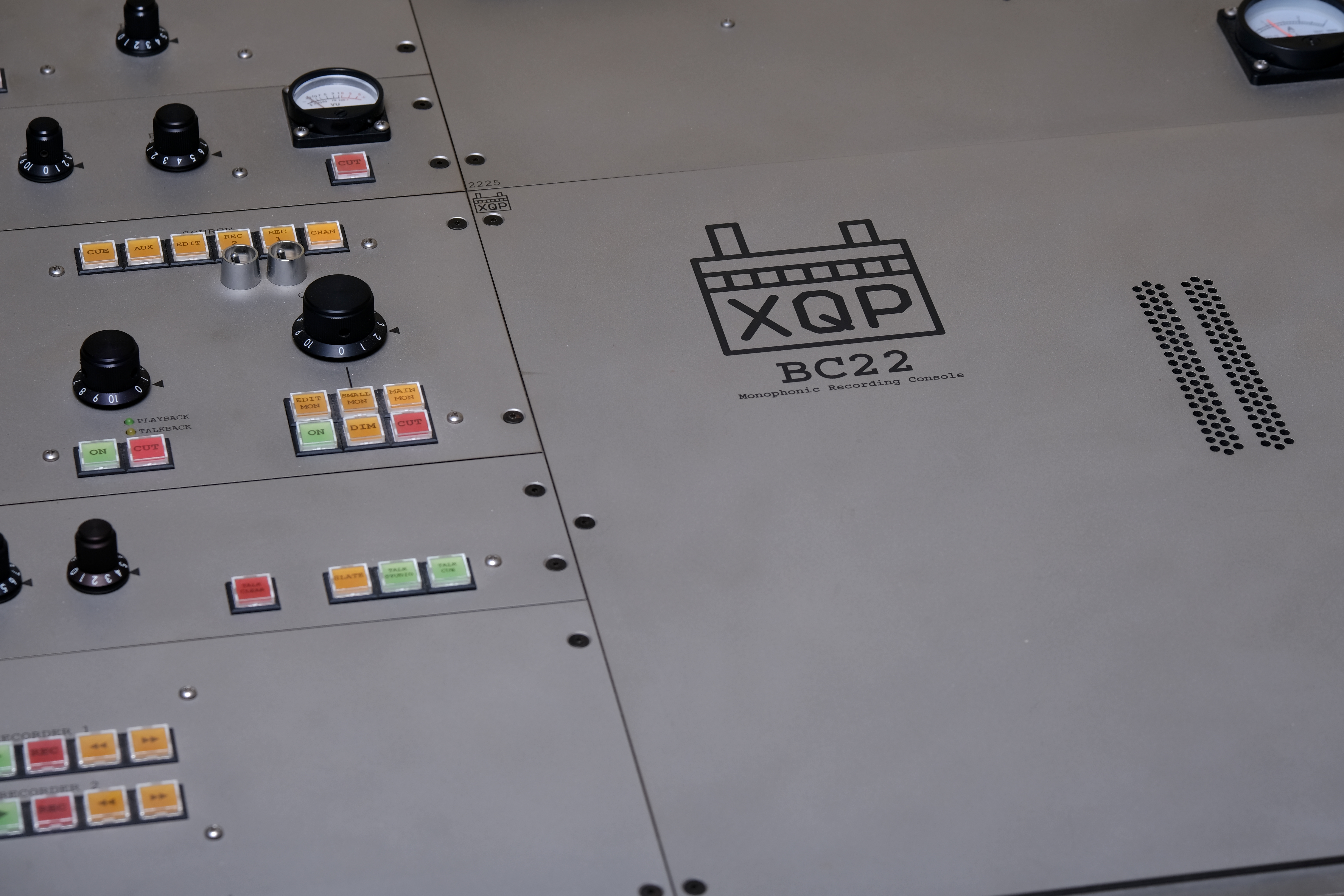
In a reversal of the usual arrangement, the right half is the input channel, the left side is the master/output section, and the center is a script desk topped by a meter panel containing a shockmount for a gooseneck talkback mic.
Back to the dual-channel mic preamp, that isn't for stereo (imagine the thought), but for ease of comparing two mics. A pushbutton switch toggles between the two preamps, allowing the engineer (me) to instantly and accurately compare two different mics. There will be a special microphone mounting system that facilitates positioning two mics very close to each other behind a single pop filter.
Speaking of pushbuttons, a large number of the switches on this console are momentary and use relay logic for latching. There is the aforementioned toggle switch, several groups of radio buttons, and a few latching types in addition to some normal latching switches. There are about 7 logic buses in the console that cause states to change in different places with certain switch positions. It's kinda fun to operate.
So I suppose I should give some explanation of one channel and mono and so forth. The only kind of audiobook that interests me in any way is one that is read by a single actor and with no music, SFX, Tibetan throat singers, tap dancers, surround mixing, etc. And that is mono. The only mixing on this console is in the cue module where the mic preamp, talkback, and an editor can be mixed to headphones for the actor in the event of a drop-in change. The normal mode of recording will be to an SD recorder only. I really don't like editors or DAWs for recording, especially one track for an hour or more non-stop. Too many old nightmares from the 1990's.
Dane Tate
XQP
