XQP 535A Program EQ: $383
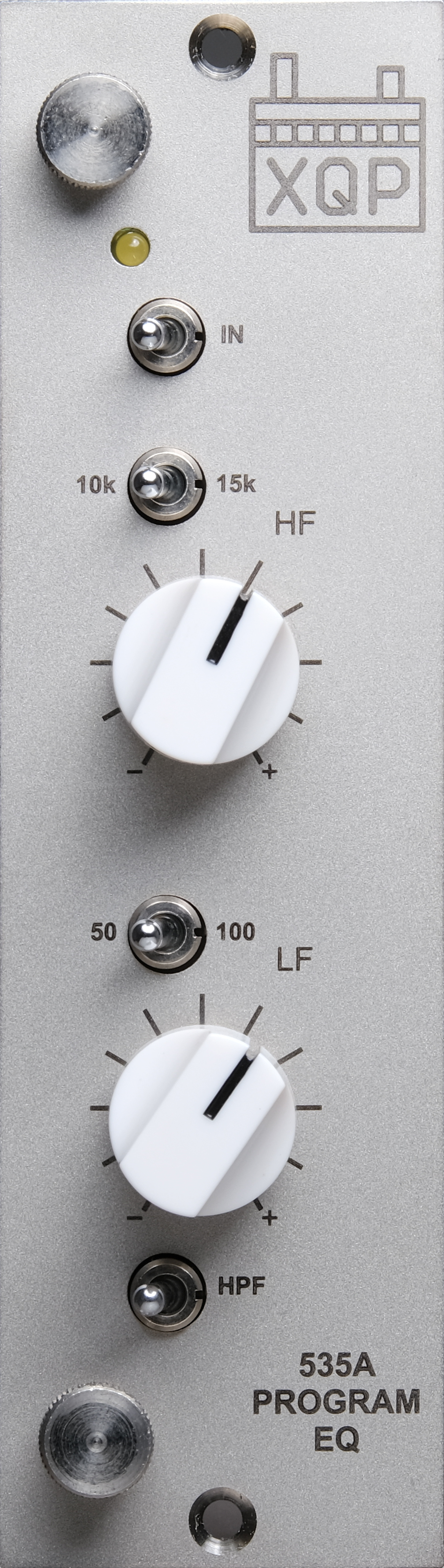
The XQP 535A Program EQ is the second version of XQP's take on the classic Baxandall 2-band equalizer circuit, and is designed to operate in an API 500-series rack, console, or similar item from another manufacturer. The Baxandall is famous for its smooth, shallow slopes that give it such a good sound it is practically impossible to abuse.
 535A User Guide
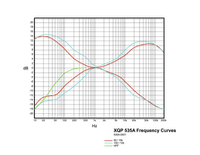 535A Response Graph
The 535 takes advantage of the Baxandall's gentle slopes and extends the corner frequencies of the HF band out beyond the stars (roughly 40kHz and 60kHz), giving the HF band a continuous climb beyond 20kHz. This makes for a very tasty high-frequency boost, in particular. The two positions of the HF band are labeled 10k and 15k respectively, because that somewhat corresponds with something familiar, to our ears at any rate.
The LF band is a bit more conventional, as it will roll off down around 10Hz due to the overall response of the unit. Two frequency choices are available here as well at 50Hz and 100Hz. Here again, the slopes of the Baxandall are so gentle it is hard to actually nail down a corner frequency the way sharper-sloped EQ's do. But that's okay. Using an EQ like this is completely about sound and dialing it in to taste. It certainly isn't difficult to operate!
In keeping with the broad strokes of the Baxandall curves, we elected to include a simple passive 6dB/octave high pass filter (HPF) set at about 90Hz. Its use alongside a LF band boost is not in any way incompatible, and various options are available using the combinations of these two controls.
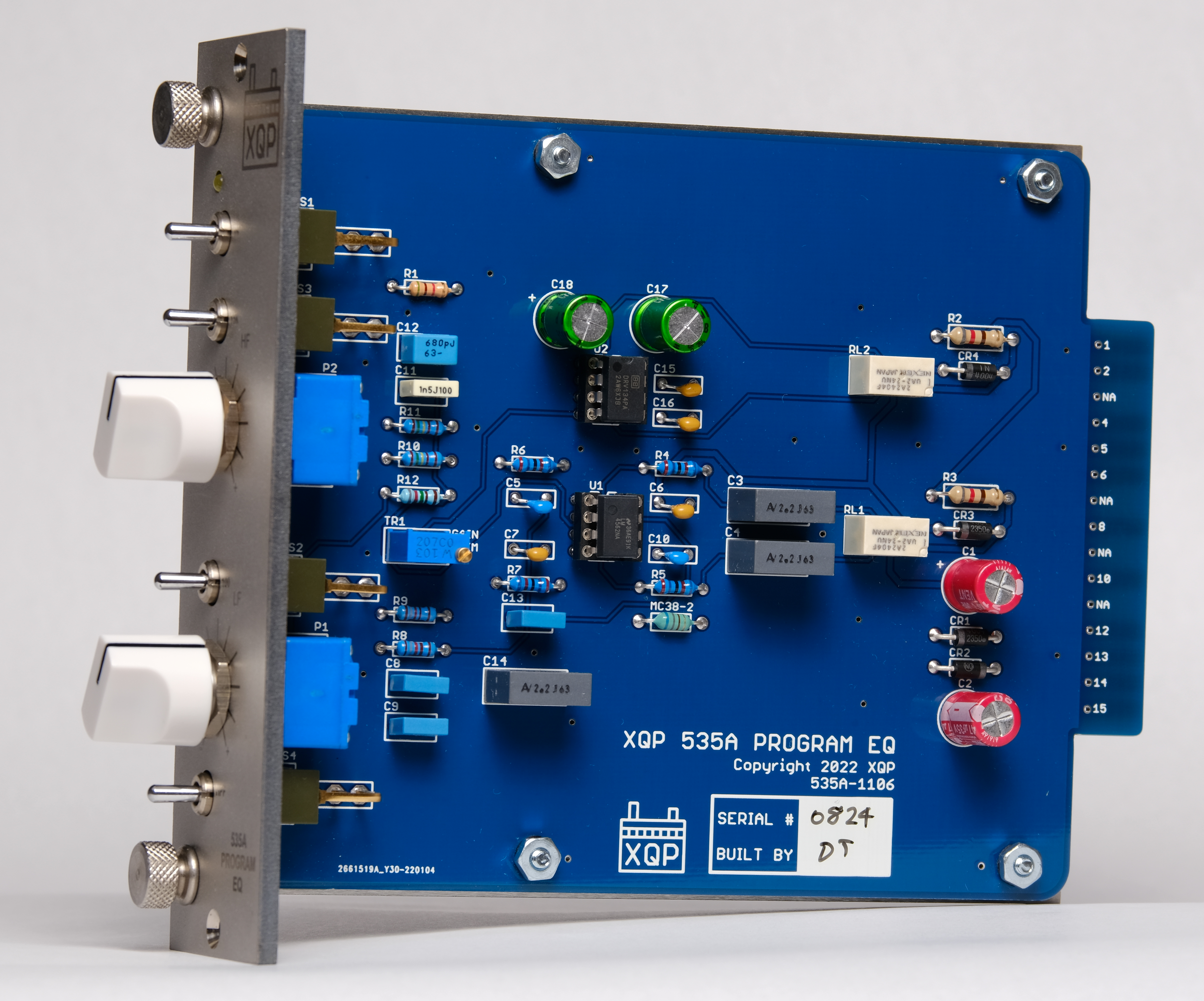
The 535A is equally at home on individual sources or mixes or submixes. If using a pair in stereo, it is not difficult to match the channels. As the slopes are so gradual, it is easy to adjust by ear, and the tick marks around the knobs make them easy to set and recall.
If you take a look at the User Guide, you will see that the amount of boost and cut varies with each frequency, again, due to the gradual slopes.
Now, we expect that you understand the IN switch. In this case it is a hard-wire relay bypass (when it is switched to the left). When it is in, the yellow LED will light up. Very simple.
